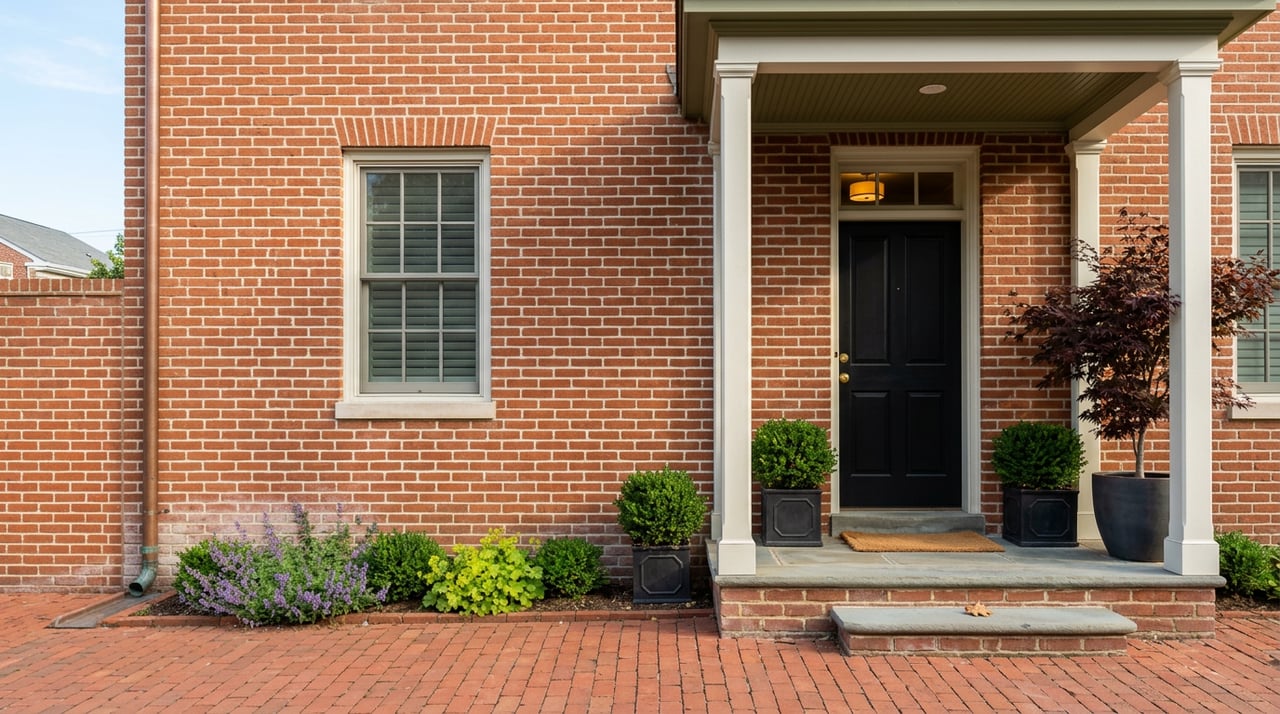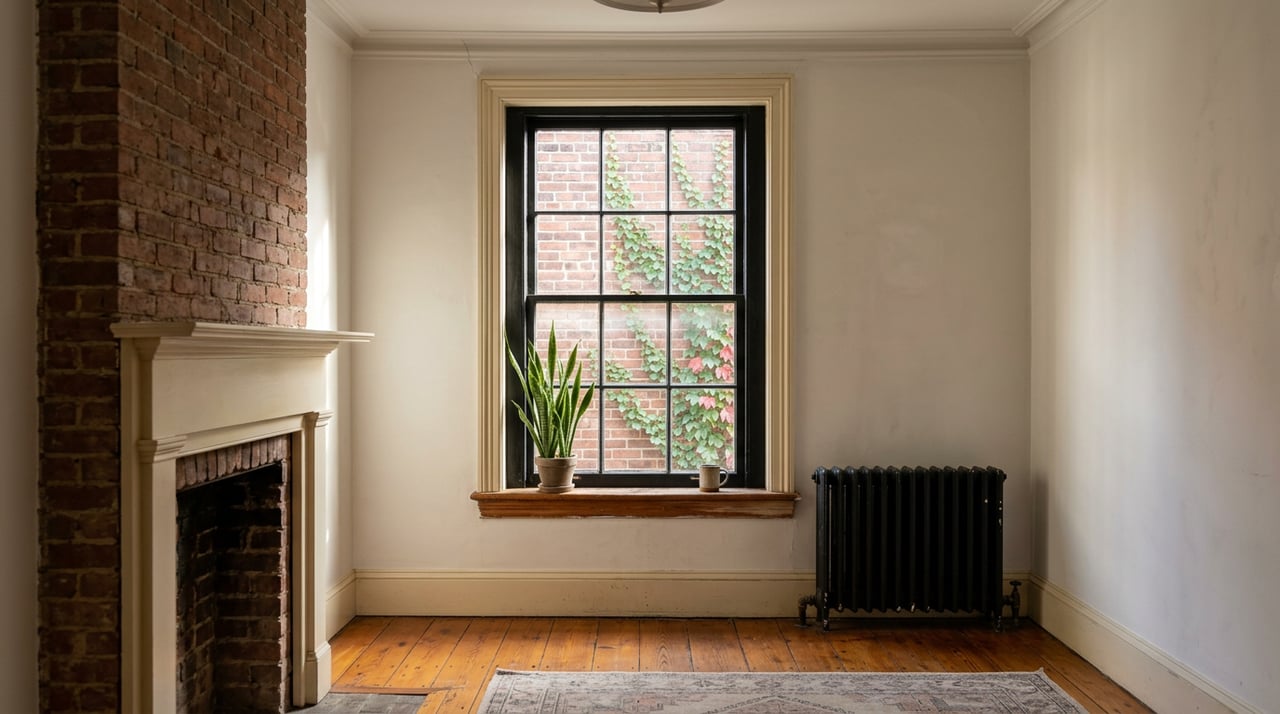
Day eight of a ten-day inspection window, a buyer under contract on a brick rowhome near Chestnut Hill got two pieces of news in the same afternoon. The inspector's report flagged knob-and-tube wiring behind the dining room wall and a stone foundation with some spalling near the rear addition. Her agent, separately, had just learned that the wraparound porch on the front of the house, the one she planned to rebuild with a wider railing, might need a Certificate of Appropriateness before anyone touched it, because the porch itself was old enough to carry its own historic standing even though the house predated it by decades.
Two deadlines were suddenly running on the same property, and neither one cared about the other. That collision, not a lack of buyers, is why some of Lancaster City's most desirable rowhomes sit on the market far longer than the numbers you see quoted for Lancaster County as a whole.
The listing that looks stale is not always a red flag
Pull up county-wide numbers and Lancaster looks like a market in a hurry. Redfin's data for the three months ending May 2026 puts the countywide median sale price at $364,000, with homes selling in an average of 7 days, barely up from 6 days the year before. Zoom into the city itself and the pace slows but stays brisk: Redfin's March 2026 figures show a $255,000 median sale price in Lancaster city and an average of 22 days on market, up from 15 days the prior year, on 63 recorded sales.
Then look at Downtown Lancaster specifically, the historic blocks radiating out from Penn Square, and the picture changes. Neighborhood-level tracking puts the average days on market there at 195, against a national average of 42, even as the trailing twelve-month average sale price sits around $336,285, in line with the rest of the city. Resideline's July 2026 read on the broader Lancaster market tells a similar story from a different angle: 21 homes pending against just 25 active listings, a pending-to-active ratio of 0.84 that signals brisk demand, alongside a median active listing that has already sat for 408 days. Fresh, realistically priced homes move almost as fast as they list. What lingers is a specific layer of older, harder-to-close properties.
That gap is not a sign the historic core is unwanted. It is a sign that closing a sale on a pre-1900 rowhome involves more steps, and more places for a deal to stall, than closing on a standard suburban resale. Two of those steps run on their own separate clocks, and a buyer who only understands one of them can watch a deal they thought was nearly done slip past both deadlines at once.
Clock one: the ten-day window that starts before you know what's behind the walls
Pennsylvania's standard Agreement of Sale does not fix an inspection timeline into state law. It leaves the window open to negotiation between buyer and seller, and if nothing else is written into the offer, the default becomes a ten-day contingency period starting from the date both sides sign. That window has to cover scheduling the inspector, receiving the written report, lining up any specialist follow-up, and getting a response back to the seller, which is why booking the inspection within the first day or two after acceptance matters more in the city's older housing stock than almost anywhere else in the county.
Once the report is in hand, a buyer has four paths. They can accept the property as-is and move toward settlement. They can submit a formal written request for repairs or a credit, using the standard form built for that purpose, listing specific items and dollar figures rather than a general list of concerns. They can negotiate from there, since a seller's refusal of one item is often the opening of a counteroffer rather than the end of the conversation. Or, if the findings are serious enough, they can terminate within the contingency window and recover the earnest money deposit in full.
Lancaster City's older rowhomes make the middle path, the credit or repair negotiation, more common than it is in newer construction, because certain findings show up again and again in this housing stock. Knob-and-tube wiring, stone foundations, and moisture issues tied to older masonry are typical enough in the city's pre-1900 blocks that inspectors expect to see them. None of that makes a home unbuyable. It does mean a buyer often needs an electrician's or mason's estimate before they can put a real number on a corrective proposal, and getting that estimate inside a ten-day window is its own small scramble.
Clock two: the review board that only looks at what the sidewalk sees
Running alongside the inspection clock, and on a completely different track, is Lancaster's Historical Architectural Review Board. HARB's authority comes from Pennsylvania's Act 167, and the statute is specific about where its power starts and stops:
"The governing body shall pass upon the appropriateness of exterior architectural features which can be seen from a public street or way, only."
In practice, that means a buyer planning to gut a kitchen or rework a bathroom in one of Lancaster's historic districts almost never needs to involve HARB. Interior work is not reviewed. Exterior painting is not reviewed either, which is good news for anyone planning a purely cosmetic refresh. But any exterior change visible from a public street, way, or alley that requires a building permit generally needs HARB review and a Certificate of Appropriateness before that permit is issued, a distinction the city's own planning ordinances spell out for anyone pulling permits in the district.
Porches are where this catches buyers off guard most often. The city treats front porches, rear porches, and upper-level balconies as meaningful design elements in their own right, and that protection is not limited to whatever was on the house when it was originally built. Many of the city's early Federal-style rowhouses picked up Victorian porches decades after construction, and those later additions can carry historic significance independent of the house itself. A buyer who assumes a porch is safe to remove simply because it looks newer than the brick behind it can find themselves filing for a Certificate of Appropriateness they never budgeted time for, on a renovation timeline that was already tight.
What both clocks look like at different price points
The stakes attached to these two clocks shift depending on where in the historic core you're buying. In Musser Park, rowhomes typically run from the $200,000s into the mid-$400,000s, while the neighborhood's rarer nineteenth-century single-family homes with attached garages can reach from the mid-$700,000s past $1 million, particularly the handful designed by Emlen Urban, the architect behind many of the city's most distinguished buildings from the 1890s through the 1920s. On a house like that, the porch or cornice detail HARB is protecting is often the exact feature driving the price premium, which raises the cost of getting the review wrong.
Head south into Cabbage Hill and the math looks different. Homes there carry a median price around $190,000, with most two- and three-bedroom rowhomes selling between $130,000 and $220,000. A knob-and-tube finding on a house at that price point still needs a corrective proposal, but the seller typically has more room to negotiate a credit without the deal falling apart, since the dollar figures involved are smaller relative to the sale price.
Either way, the neighborhood's daily rhythms sit right alongside the housing stock. Musser Park residents walk to Lancaster Brewing Company, set up in a former tobacco warehouse, or to farm-to-table spots like Passerine and The Belvedere Inn. In Cabbage Hill, the anchors are Culliton Park, still known to longtime residents by its earlier name of Farnum Field before a 2020 renaming, along with neighborhood staples like Alfred and Sam's Italian Bakery, baking since the late 1950s, and J & J Mofongo down the block. None of that changes how HARB or a ten-day inspection clock works. It does mean the buyer standing in front of either house is choosing a specific kind of daily life along with a specific set of transaction risks.
Reading a slow listing correctly
Put the two clocks next to the days-on-market numbers and Lancaster's historic core stops looking mysterious. A rowhome that has sat for 190 days did not necessarily fail to attract interest. It may have gone under contract once already, with a prior buyer who ran out of time inside a ten-day inspection window waiting on an electrician's quote, or who discovered mid-renovation-planning that a porch they assumed was fair game needed a Certificate of Appropriateness first. Either scenario ends the same way: the deal falls through, the listing resets, and the days-on-market counter keeps climbing on a house that was never actually unwanted.
For a buyer working with the James T Dunn III and the James Dunn Team, the practical response is straightforward. Get the inspector scheduled within the first day or two after signing, not the fifth or sixth. Ask the seller directly whether any exterior work, especially anything involving a porch, window, or roofline, has already gone through HARB and secured approval. And if a listing has been sitting for months in one of these historic neighborhoods, treat that history as a question to ask rather than a reason to walk away. The answer is often sitting in a stalled prior transaction, not in the house itself.
A few common questions
Does HARB review apply to every house in Lancaster City? No. It applies to properties within the city's designated Historic District and Heritage Conservation District, and only to exterior changes visible from a public street, way, or alley that require a building permit.
What happens if my inspector finds knob-and-tube wiring or a stone foundation? Neither is unusual in Lancaster's older housing stock. The standard path is a written corrective proposal asking for repairs or a credit, often backed by a specialist's estimate, submitted within the negotiated inspection contingency window.
Can I still make an offer on a home that's been listed for months? Yes. A long time on market in the historic core often reflects a prior deal that stalled over one of these two clocks rather than a defect in the property. Ask what happened with any earlier contract before assuming the worst.
Every rowhome in Lancaster's historic core comes with its own version of these two clocks, and knowing which one to watch first is half the work of getting to a closing table without surprises. If you're weighing a purchase in Musser Park, Cabbage Hill, Chestnut Hill, or anywhere else inside the district, the James Dunn Team has spent more than two decades reading exactly these timelines. Deal Gets Dunn.